
Periodontics
Gum treatment in Palafrugell: periodontal assessment, root planing and maintenance visits to stop periodontitis progressing.
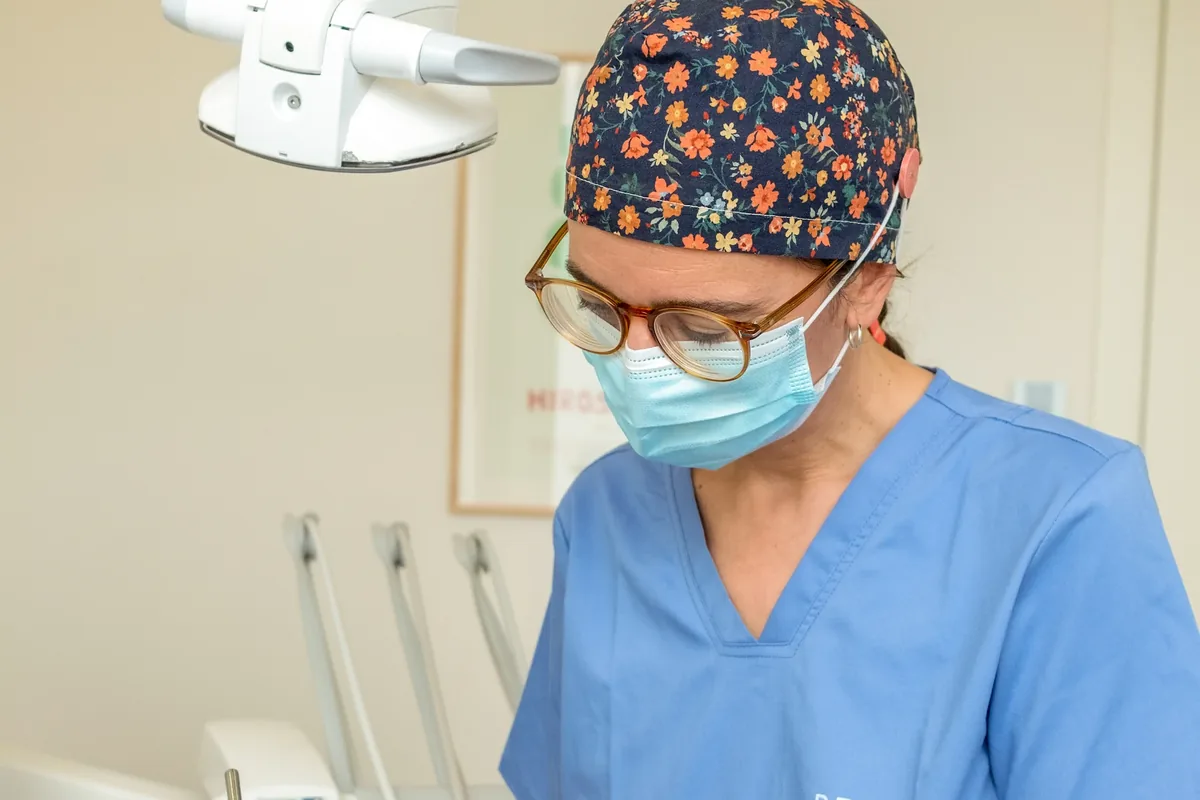
Periodontics
Gums bleed because they are inflamed, not because you brush too hard. If that inflammation stays, it reaches the bone holding the tooth in place and gradually destroys it: that is periodontitis. The difficulty is that it causes little pain until the tooth starts to move, which is why we check your gums at every appointment.
Periodontics is about preventing, diagnosing and treating all of this. We measure the depth of the crevice around each tooth with a probe, take the X-rays we need and, with that map, we know which areas are affected and how much bone has been lost at each point.
Treatment means cleaning the root surfaces below the gum thoroughly so the inflammation settles and the disease stops advancing. Bone that has already been lost does not come back, but the process can be held in check for many years with the maintenance we set out for you.
What it includes: Periodontics
- Periodontal assessment. Probing of every tooth, a periodontal chart and X-rays to see where the pockets are and how much bone has been lost.
- Treating gingivitis. When the inflammation has not yet reached the bone, a professional cleaning and correcting where your brushing misses is enough.
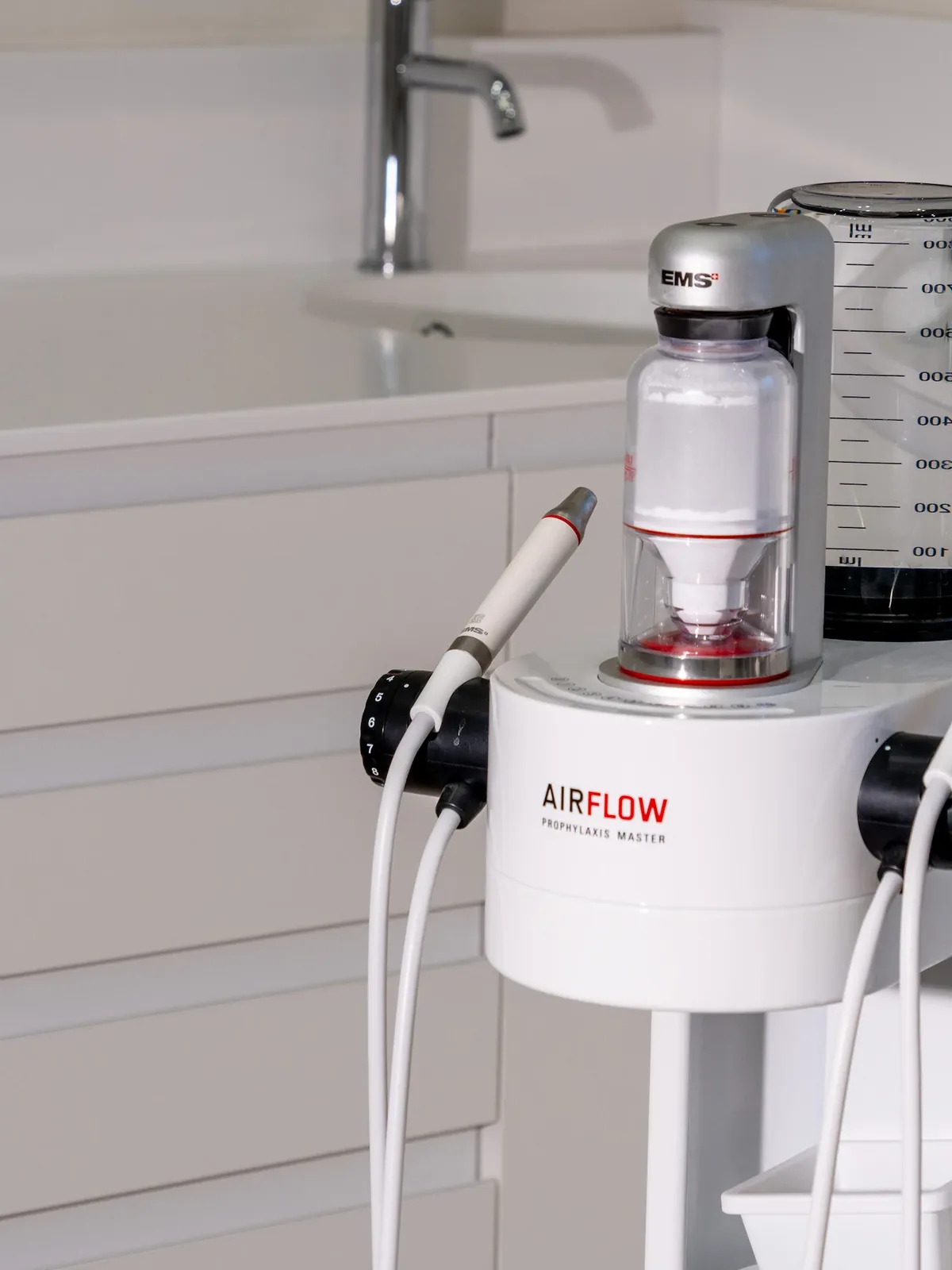
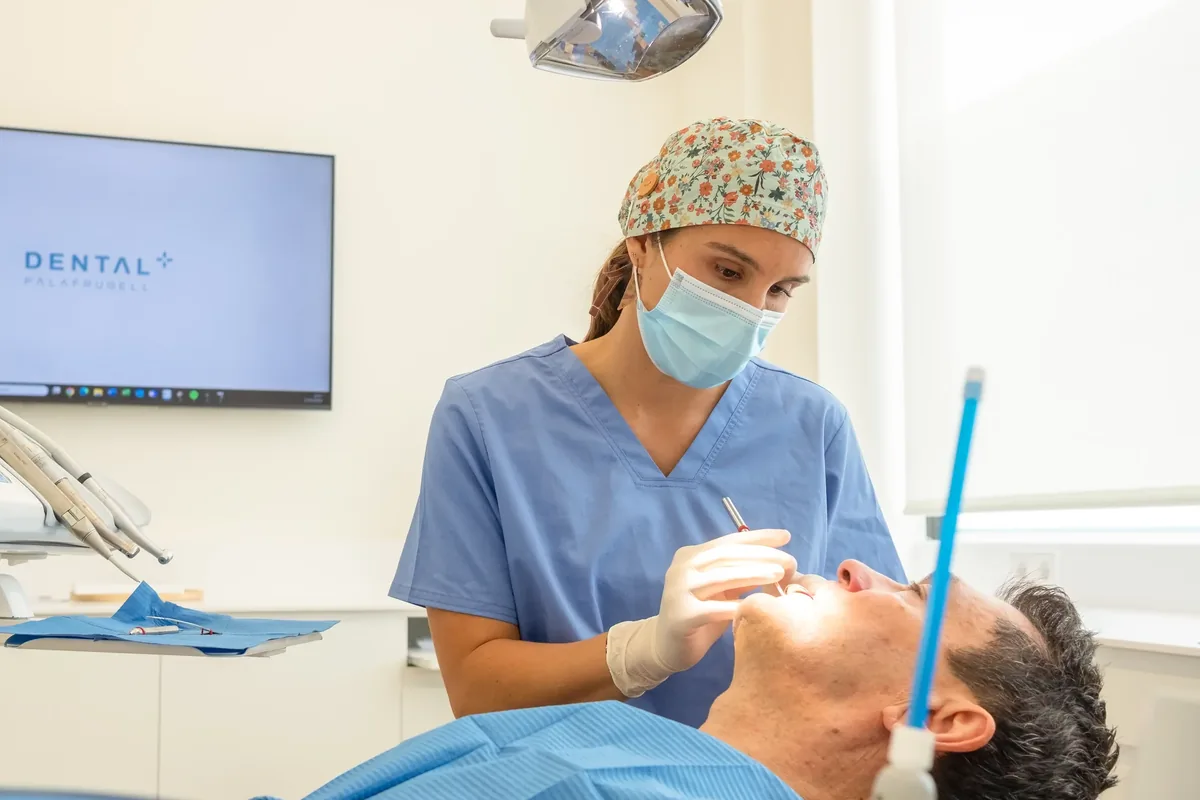
- Scaling and root planing. We clean the root surface below the gum with ultrasonic tips and curettes, quadrant by quadrant and under local anaesthetic, clearing plaque and tartar out of the pockets.
- Re-evaluation. A few weeks later we probe again to see which pockets have closed and whether any area needs a further step.
- Periodontal maintenance. Regular appointments, every three to six months depending on the case, to keep bleeding under control and stop the disease advancing again.
- Assessing advanced cases. When an area does not respond, we review it with the surgical team and decide together what to do with teeth that can no longer be kept.
How we do it
Every treatment begins with an examination and a detailed quote. This is how it usually works:
- 01
First appointment and assessment
We take your history, probe every tooth and take the X-rays needed for a full picture of the bone level.
- 02
Treatment plan and estimate
We show you the chart, explain how many appointments are needed and in what order, and give you a written estimate.
- 03
Treatment quadrant by quadrant
Root planing is done under local anaesthetic, usually over two to four appointments, treating one part of the mouth at a time.
- 04
Re-evaluation and maintenance
After a few weeks we check how the gums have responded and set how often you will need to come for maintenance.
Bring any X-rays you have from other clinics, and tell us if you smoke, have diabetes or take anticoagulants: all three affect how the treatment will respond and how we plan it. In the first days after root planing your teeth may feel sensitive to cold and your gums may look slightly more receded, because the swelling has gone down and the necks of the teeth are more exposed. Book on 972 30 65 64 or through the contact form.
Accepted by most dental insurers. Give us a call and we'll tell you whether we work with yours.
Panoramic X-rays and dental CT scans are taken at Centre Mèdic Palafrugell, part of the same group, at Plaça de Catalunya, 5.
Who will see you
 Dra. Glòria Rodrigo DavanProsthodontics and aesthetics, general dentistryRead her profile →
 Dra. Glòria Sancho BreganteImplantology and oral surgeryRead her profile →
 Dra. Maria Hernández ImazPeriodontics and general dentistryRead her profile →
 Sra. Helena Torrellas AgudoDental hygienistRead her profile →
 Sra. Marta Parella BatlleClinic assistant and hygienistRead her profile →
Frequently asked questions about Periodontics
My gums bleed when I brush. Is that serious?
Bleeding always means inflammation, and it is worth looking into. Often it is gingivitis, which clears up with a cleaning and better brushing technique. If there is also bad breath, receding gums or a tooth that feels loose, a full periodontal assessment is needed.
Does root planing hurt?
It is done under local anaesthetic, so you should not feel pain during the appointment. Afterwards your gums may be sore and your teeth sensitive to cold for a few days; an ordinary painkiller and a sensitive-teeth toothpaste are usually enough.
Will the bone I have lost grow back?
With standard treatment, no: the aim is to stop further loss and keep the teeth you have. The inflammation settles, the pockets get shallower and the bleeding stops, but bone that has gone does not return on its own. That is why starting early and keeping up the maintenance visits matter so much.
Does my insurance cover gum treatment?
It depends on your policy: some cover the assessment and the cleaning and apply an agreed rate to root planing, while others do not include periodontics at all. Send us your insurance details and we will check before we start.

Call or write to us
The quickest way is the phone: we'll answer straight away and find you a time. If you'd rather write, send the contact form and we'll get back to you as soon as we can.