
Prosthodontics
Replacing missing teeth in Palafrugell with fixed or removable prostheses: crowns, bridges, inlays and implant-supported work.
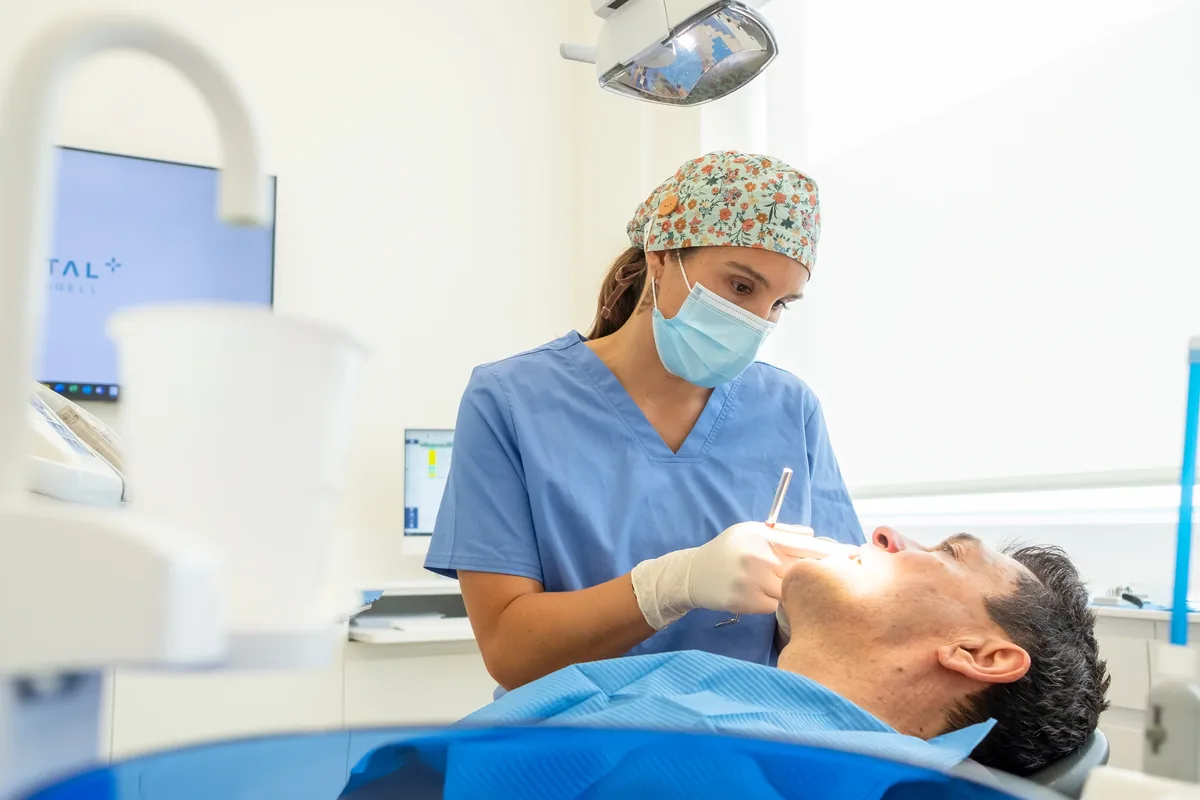
Prosthodontics
Prosthodontics is about replacing teeth that are no longer there and rebuilding those too broken down to hold a filling. It is not only a question of appearance: when a tooth is missing, the ones beside it drift, the opposing tooth drops down and the bite gradually loses its balance.
There is no single answer. We study each case — how many teeth are missing, what condition the remaining ones are in, how much bone there is, what you find comfortable — and propose a plan that may be a removable denture, fixed work on your own teeth, or a prosthesis on implants. Often more than one option is valid, and the decision is yours once you have the facts.
We work with a dental laboratory: the records are taken here, the technician makes the piece and we try it in before fitting it permanently, adjusting the shade, the shape and above all how your bite feels. That try-in stage is what saves you from living for years with a piece that rubs, traps food or never quite closes properly.
What it includes: Prosthodontics
- Removable dentures. Partial, when you still have teeth to rest them on, or full. You take them out to clean them, and they are the most affordable and least invasive option when several teeth are missing.
- Crowns. They cover the whole tooth when little healthy tissue is left, or after root canal treatment, protecting it from fracturing when you chew.
- Bridges. They replace one or more teeth by resting on the neighbouring ones, which are prepared to support the unit. They are fixed and stay in place.
- Inlays and onlays. Laboratory-made pieces that rebuild a large part of a back tooth without preparing it entirely as a crown would require — a middle step between a filling and a crown.
- Veneers. They cover the visible face of the front teeth when the issue is colour or shape and the tooth itself is sound underneath.
- Implant-supported prostheses. Crowns, bridges or full arches anchored to implants. They replace teeth without preparing the neighbouring ones and, in full arches, give far more stability.
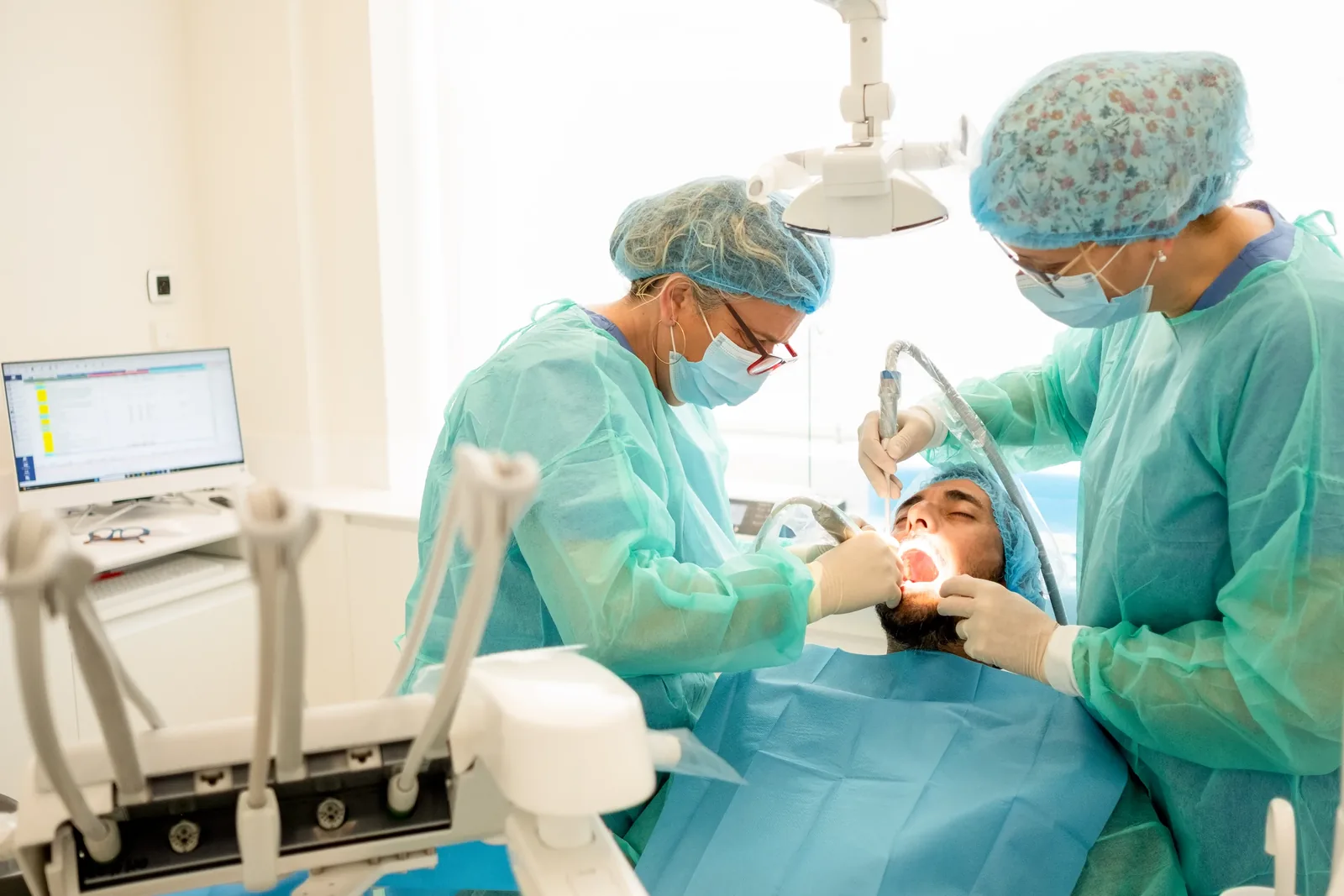
How we do it
Every treatment begins with an examination and a detailed quote. This is how it usually works:
- 01
Assessment
We examine your mouth, assess the remaining teeth and the gums and order whatever X-rays are needed; the panoramic can be taken at Centre Mèdic Palafrugell, on Plaça de Catalunya, 5.
- 02
Treatment plan and quote
We go through the possible options with the pros and cons of each, the number of appointments and the overall timescale, and you leave with an itemised quote.
- 03
Preparation and try-in
We prepare the teeth if necessary, take the records for the laboratory and fit a temporary. Before anything is cemented we try in the final piece to adjust shade, shape and bite.
- 04
Fitting and reviews
We fit the final prosthesis and see you again a few weeks later to adjust anything that needs it. After that, a yearly review to check the fit and the health of your gums.
A prosthesis is not a new tooth: it needs looking after. Removable dentures must be cleaned every day and, over the years, the bone changes and they need relining or remaking. Fixed work calls for particularly careful cleaning around the margins and under bridges, with interdental brushes or a water flosser. With regular reviews and a good routine at home it lasts for many years; without maintenance, trouble comes back through the gum.
Accepted by most dental insurers. Give us a call and we'll tell you whether we work with yours.
Panoramic X-rays and dental CT scans are taken at Centre Mèdic Palafrugell, part of the same group, at Plaça de Catalunya, 5.
Who will see you
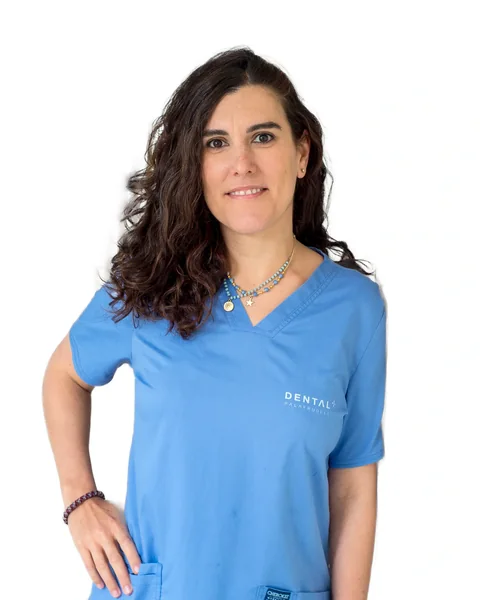 Dra. Glòria Rodrigo DavanProsthodontics and aesthetics, general dentistryRead her profile →
 Dra. Glòria Sancho BreganteImplantology and oral surgeryRead her profile →
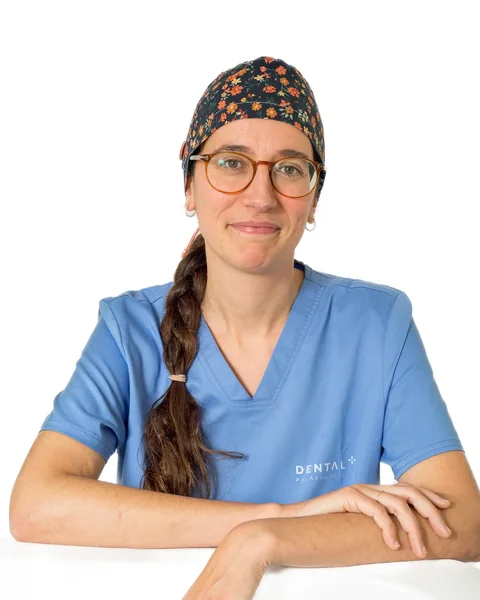 Dra. Maria Hernández ImazPeriodontics and general dentistryRead her profile →
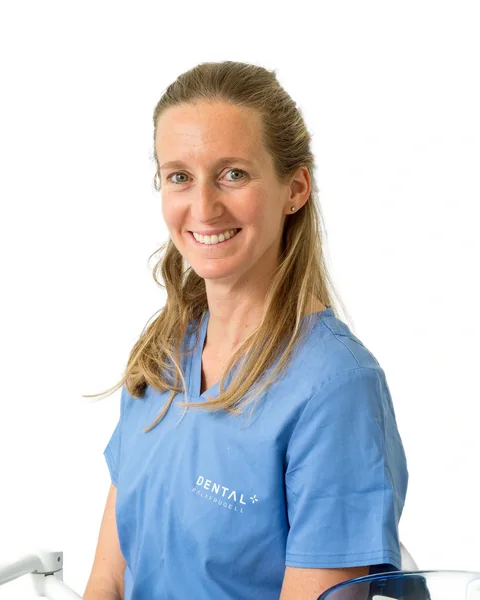 Dra. Isabel García BorràsEndodonticsRead her profile →
 Dra. Sandra Font de RubinatProsthodontics and aesthetics, general dentistryRead her profile →
Frequently asked questions about Prosthodontics
Does having a crown or bridge fitted hurt?
No. The tooth is prepared under local anaesthetic, so you feel no pain; afterwards there may be some sensitivity or gum tenderness for a couple of days. If the tooth has had root canal treatment, anaesthetic is often not even needed.
How many appointments does it take, and how long does it last?
A crown or bridge usually takes two or three appointments over three or four weeks; a full removable denture takes a few more, as it is built up in stages. Once fitted, how long it lasts depends largely on hygiene and on your bite: with good care, more than ten years is common.
Is there an age when it is no longer worth it?
No. What decides is not your age but the state of your gums, bone and remaining teeth, along with what you need in order to eat and speak comfortably. For older patients a well-fitted removable denture is often the best answer, as it is simple to maintain and to repair.
Do insurers cover prosthetic work?
Rarely in full. Most dental policies cover the check-up and the hygienist and treat prosthetic work at an agreed rate or with part of the cost payable by you. Bring your policy or tell us which one you have on 972 30 65 64 and we will set it out in the quote, with no surprises.
Call or write to us
The quickest way is the phone: we'll answer straight away and find you a time. If you'd rather write, send the contact form and we'll get back to you as soon as we can.