
Orthodontics
Teeth straightening in Palafrugell with Invisalign or braces, plus functional appliances when jaw growth needs correcting.
Orthodontics
Orthodontics puts your teeth where they belong, whether what bothers you is how they look or how they work: a bite that does not meet properly, teeth that overlap, or areas that are hard to clean where decay keeps coming back. We study your case before suggesting anything, because the same crowding is not treated the same way at twelve as it is at forty.
We work with Invisalign, the clear rigid aligners you can take out to eat and to brush, and also with metal or tooth-coloured fixed braces bonded to the front of the tooth. Both systems can handle most cases; the choice depends on how complex the movements are, on your daily habits and on what you feel able to wear every day.
When the problem is not only the teeth but the relationship between the jaws — widening the palate, bringing the lower jaw forward or back, holding the space left by a lost tooth — we use specific fixed or removable appliances: a Nance arch, a twin-block, a quad-helix or space maintainers. In children and teenagers these appliances work with growth and often save longer treatment later on.
What it includes: Orthodontics
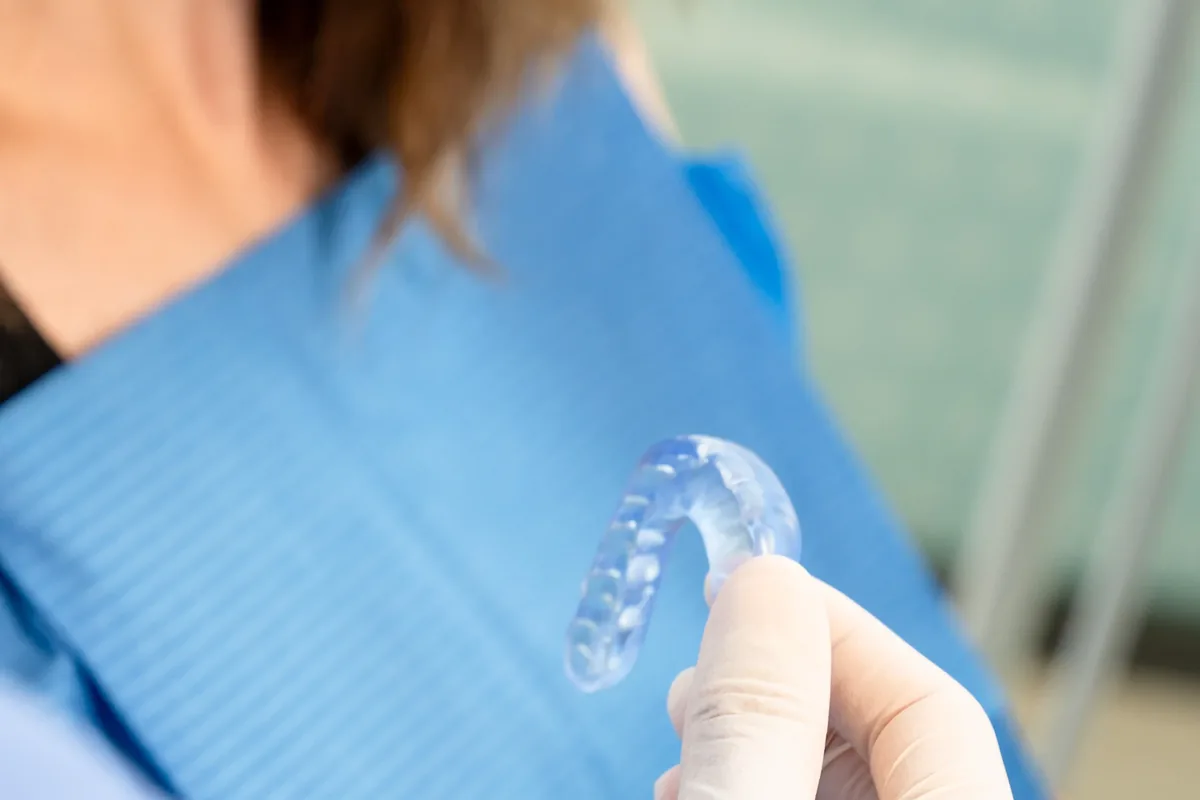
- Invisalign. Clear rigid aligners that you change every few weeks and take out to eat and brush. They are discreet and make cleaning easy, but they need commitment: they have to be worn most of the day.
- Metal braces. The classic fixed system: robust and effective for complex movements. Because they cannot be removed, nothing depends on remembering to put them in.
- Tooth-coloured braces. They work just like metal braces, but the brackets are made of a tooth-coloured material that makes them far less noticeable close up.
- Expansion appliances: quad-helix and Nance arch. Fixed to the back teeth and working on the palate: the quad-helix widens a narrow palate, while the Nance arch stops the molars drifting forward during treatment.
- Functional appliances: twin-block. A removable two-part appliance that guides the position of the lower jaw during growth, mainly for children and teenagers whose lower jaw sits too far back.
- Space maintainers. When a child loses a milk tooth early, they hold the gap so the adult tooth can come through in the right place and space does not have to be reopened later.
- Retainers. When treatment ends we fit a fixed retainer behind the teeth, a clear night-time retainer, or both. This is what keeps the result in place long term.
How we do it
Every treatment begins with an examination and a detailed quote. This is how it usually works:
- 01
First appointment and assessment
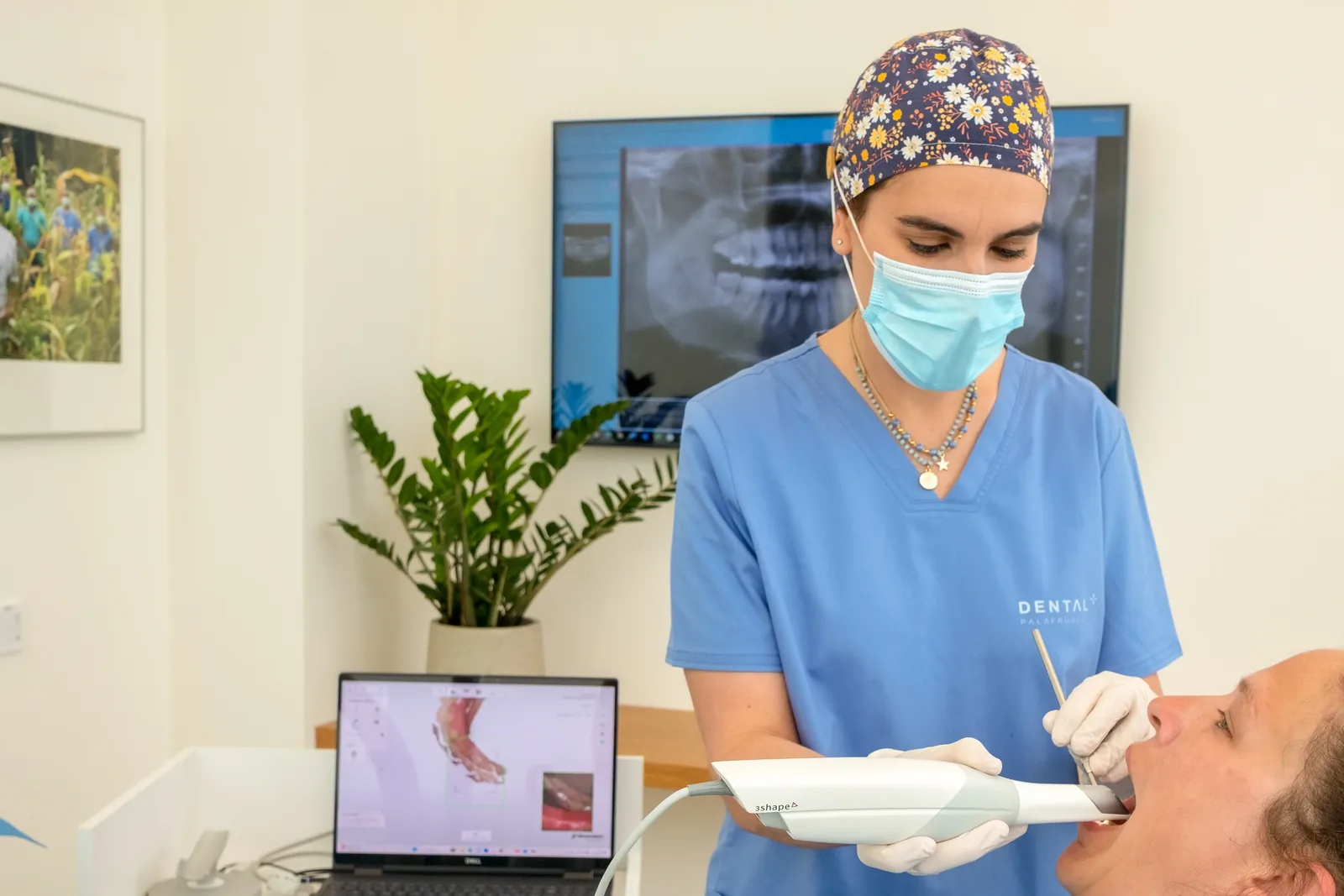
We examine your bite, take photographs and records of your teeth and, if needed, a panoramic X-ray at Centre Mèdic Palafrugell, part of the same group, on Plaça de Catalunya, 5.
- 02
Treatment plan and quote
We explain what can be moved, with which appliance, how long it will take and what the alternatives are. You get a written, fixed quote before deciding anything.
- 03
Active treatment
We fit the appliance and see you every four to six weeks to adjust it and check the teeth are moving as planned. With Invisalign we hand you several sets of aligners at each visit.
- 04
Removal and retention
Once the result is where we want it, we remove the appliance, fit the retainer and book a review, first after a few months and then once a year.
More than anything, orthodontics asks for consistency: wearing the appliance for the agreed hours, coming to your reviews and being extra careful with hygiene, since plaque builds up more easily around braces and aligners. With Invisalign the key is daily wearing time; with braces, avoiding very hard or sticky food. And retention is not optional: teeth tend to drift back towards their old position if you stop wearing the retainer.
Accepted by most dental insurers. Give us a call and we'll tell you whether we work with yours.
Panoramic X-rays and dental CT scans are taken at Centre Mèdic Palafrugell, part of the same group, at Plaça de Catalunya, 5.
Frequently asked questions about Orthodontics
Do braces hurt?
Fitting the appliance does not hurt. What you will feel is a few days of pressure and tenderness when chewing each time we tighten it or you change aligner; it usually settles within two or three days and a normal painkiller is enough. With braces the brackets may rub your lip at first, which is what the wax we give you is for.
How long does orthodontic treatment take?
It depends on how much has to move. Simple cases, such as slight crowding at the front, can be sorted in six to nine months; full treatments usually run from eighteen months to two years, and cases that involve guiding jaw growth can take longer. We give you a specific estimate for your case at the first appointment.
At what age can treatment start?
We suggest a first check at six or seven — not to fit braces, but to see whether the palate is narrow, whether there is a crossbite or a lack of space. Those things are easier to correct while a child is growing. Full treatment usually happens between eleven and fourteen, but there is no age limit for adults: if the gums and bone are healthy, teeth move just the same.
Is orthodontics covered by health insurance?
Usually not in full. Most dental policies cover the check-up and the hygienist, and treat orthodontics at an agreed rate or with part of the cost payable by you. Tell us which policy you have when you ring 972 30 65 64 and we will clear it up before starting; either way, you always get the quote in writing.
Call or write to us
The quickest way is the phone: we'll answer straight away and find you a time. If you'd rather write, send the contact form and we'll get back to you as soon as we can.